
Excessive worry, persistent anxiety, and loss of interest are certain mental health concerns that can eventually impact an individual’s interpersonal relationships, professional commitments, and overall quality of life. Although occasional distress and emotional upheavals are considered absolutely normal, professional assessment and psychological intervention are needed if the symptoms are persistent or are severe.
What Is CBT (Cognitive Behavioral Therapy)?
Cognitive Behavioral Therapy (CBT) is a structured, goal-directed form of psychotherapy that helps people to identify and control unhelpful patterns of thought, feeling, and behavior.
Cognitive behavioral therapy (CBT) is a talk therapy that helps you observe and change unhelpful thoughts and behaviors. It emphasizes the significance of how your thoughts influence how you feel and behave.
CBT is recognized as a first-line treatment for anxiety disorders and depression.
Understanding Depression and Anxiety Using the DSM-5-TR
Mental health professionals define and evaluate mental health issues using recognized diagnostic criteria included in the Diagnostic and Statistical Manual of Mental Disorders, It is important to keep in mind that depression and anxiety are not an identical pair of disorders. They consist of different diagnostic criterias with different clinical features.
Anxiety Disorders:
Generalized Anxiety Disorder (GAD): A mental health condition that is characterized by persistent, excessive, uncontrollable, and irrational worry about events or activities.
Panic Disorder: Panic disorder is a chronic anxiety condition characterized by recurrent, unexpected panic attacks and a persistent fear of having future episodes
Specific Phobia: Irrational fear or anxiety about a specific object or situation (e.g., flying, heights, animals) that is avoided or endured with intense distress.
Agoraphobia: An anxiety disorder characterized by an intense fear and avoidance of situations where escape might be difficult or help might not be available if panic symptoms or a panic attack occur
Social Anxiety Disorder (Social Phobia): Irrational fear or anxiety about social situations where the individual is exposed to possible scrutiny or judgment by others.
Separation Anxiety Disorder: Excessive fear or anxiety concerning separation from those to whom the individual is attached.
Selective Mutism: Consistent failure to speak in specific social situations (such as school) where speaking is expected, despite speaking in other settings, such as at home.
Substance/Medication-Induced Anxiety Disorder: Anxiety symptoms judged to be a direct consequence of a substance of abuse, medication, toxin, or other medical treatment.
Anxiety Disorder Due to Another Medical Condition: Panic attacks or other anxiety symptoms caused by 1 or more substances. The symptoms occur while you’re using or exposed to the substance (intoxication) or after you have stopped.
CBT provides a way of understanding emotional distress, learning new skills, and identifying and pursuing meaningful goals.
2. Depressive Disorders
According to the DSM-5, Major Depressive Disorder (MDD) is diagnosed when a person experiences 5 or more of the following symptoms during the same 2-week period, representing a change from previous functioning. At least one of the symptoms must be either depressed mood or loss of interest or pleasure. Additionally, symptoms must cause significant distress or functional impairment and cannot be due to substances, medical conditions, or other primary psychotic disorders.
Core Symptoms (Must include at least one of the first two)
- Depressed Mood: Depressed mood most of the day nearly every day (or irritability in children/adolescents) or markedly diminished interest/pleasure in activities.
- Physical & Energy Changes: Significant appetite/weight fluctuations, insomnia or hypersomnia, observable psychomotor agitation/retardation, or fatigue/loss of energy nearly every day.
- Cognitive & Emotional Symptoms: Feelings of worthlessness or inappropriate guilt, diminished ability to think or concentrate, indecisiveness, or recurrent thoughts of death, suicidal ideation/attempts
Please note that a detailed clinical diagnosis by a qualified healthcare and mental health professional is required to determine whether a person’s symptoms match the official criteria for a specific mental health condition
Key Statistics for Prevalence of Anxiety Disorders
- Adult Prevalence: The current weighted prevalence of anxiety disorders among Indian adults is 2.57%.
- Case Numbers: According to public health data and World Health Organization (WHO) reports, nearly 3.7 crore (37 million) people in India live with anxiety disorders.
- Long-Term Growth: Data from the Global Burden of Disease (GBD) study indicates that anxiety disorders in India have more than doubled (increasing by 123.5% to 123%) between 1990 and 2023.
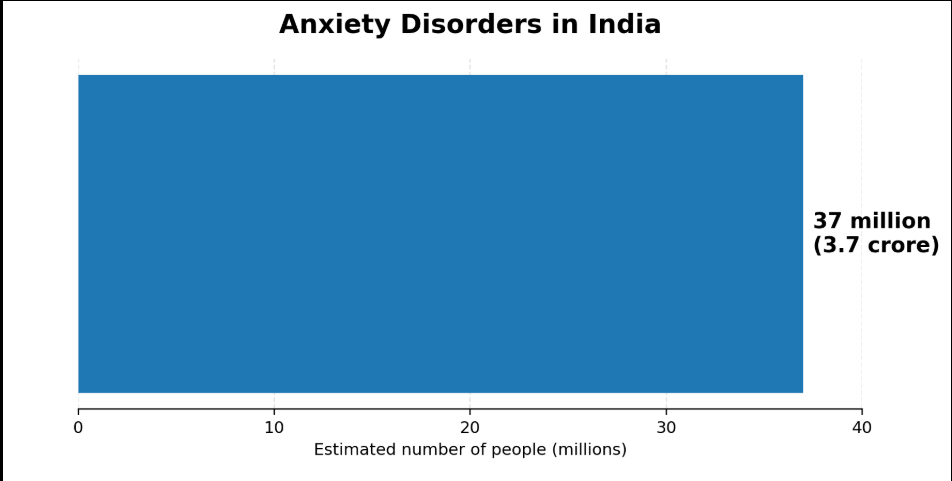
Source: WHO, Depression and Other Common Mental Disorders: Global Health Estimates (2017), estimates for 2015.
Key Statistics for Prevalence of Depression
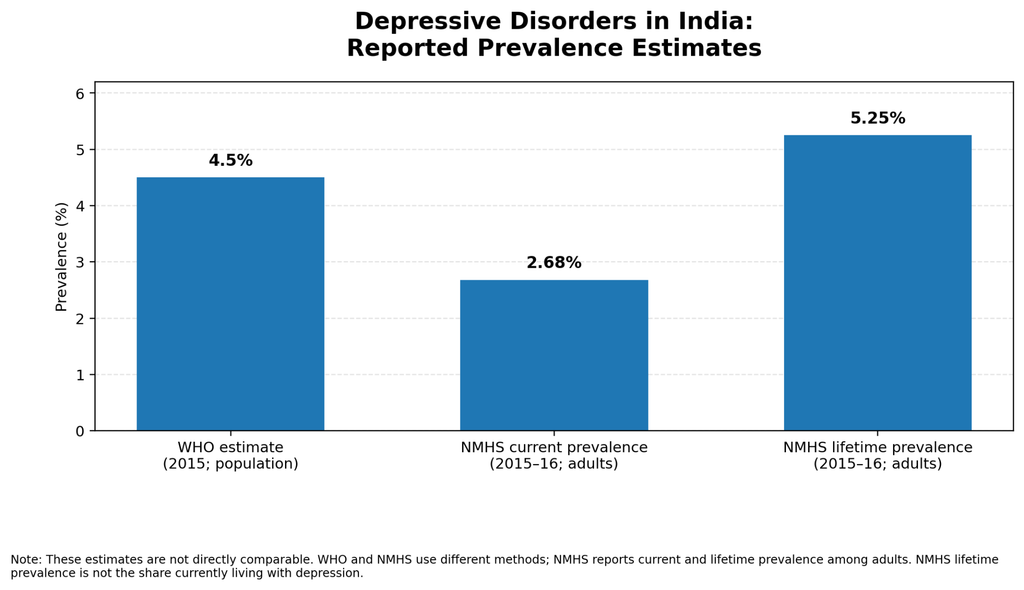
Adult Prevalence Rate Lifetime prevalence of depressive disorders in Indian adults is 5.25%, and current prevalence is 2.68%.
The World Health Organization (WHO) and National Mental Health Survey (NMHS) estimate that approximately 5.5 crore people in India are suffering from depressive disorders.
Long-Term Growth: According to the landmark India State-Level Disease Burden Initiative (published in The Lancet Psychiatry), the contribution of mental disorders to total Disability-Adjusted Life-Years (DALYs) in India nearly doubled from 2.5% in 1990 to 4.7% in 2017, with depressive disorders accounting for the largest share (33.8%) of mental disorder DALYs
How Does Cognitive Behavioral Therapy Help In Managing Depression and Anxiety Disorders?
CBT is a structured, goal-directed talk therapy that has been designed to help you break the vicious cycle of connected thoughts, feelings, physical sensations, and behavior.
CBT includes the following strategies.
- Cognitive Restructuring (Thought Challenging) Identify automatic negative thoughts, assess the factual evidence for and against them, and replace them with balanced or realistic alternatives.
- Graded exposure: It is a technique where the mental health professional helps you to face your fears of situations or triggers slowly and safely.
- Exposure Techniques: This makes you less avoidant, more emotionally tolerant, and ultimately less intense in your anxiety response.
- Relaxation & Breathing Training: Employing techniques such as progressive muscle relaxation (PMR), diaphragmatic breathing, or grounding to calm the physiological nervous system response.
Importance of Professional Clinical Assessment?
Professional clinical assessment by a healthcare professional is supremely essential to accurately diagnose anxiety and depression because symptoms heavily overlap, mimic physical health issues, and require tailored treatment plans rather than generic fixes
Fatigue, irritability, sleep disturbance, and trouble concentrating are signs that appear in both anxiety and depression (as well as other conditions like bipolar disorder or thyroid problems). A detailed evaluation by a qualified healthcare professional is extremely important to prevent wrong diagnoses, such as giving antidepressants for an undiagnosed mental health condition.
Also Read : OCD Treatment Guide: Diagnosis, Therapy & Medications
Embark on Your Journey Towards Better Mental Health With AIMAN Hospital
You are not looking for just any hospital. You are looking for the right one—AIMAN Hospital is the place where expert care meets genuine compassion, where your dignity is protected, and where recovery is a structured, supported reality.
AIMAN Hospital in Gurugram is a dedicated mental health hospital—India’s most trusted name in mental healthcare. From the moment you walk through our doors, you will understand why families choose AIMAN Hospital when it’s about the right care for mental health.